

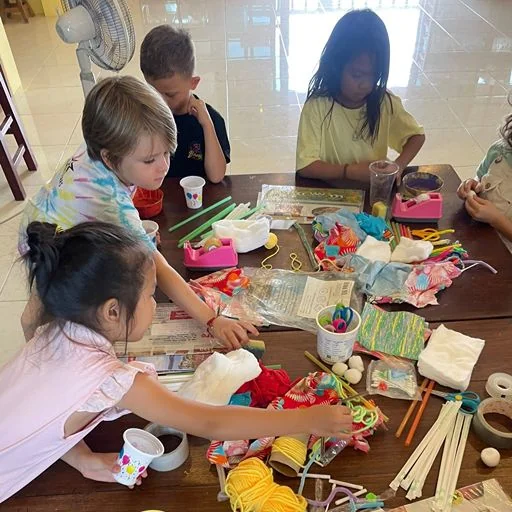
Choosing a preschool or kindergarten is an important decision. Parents naturally want to give their child the strongest possible start, and a large school can initially appear impressive.
A big campus, many classrooms, extensive facilities and a long list of activities can all create a positive first impression. However, the biggest school is not automatically the best school for every child.
During the early years, children need more than impressive surroundings. They need to feel safe, understood and confident enough to participate. The most suitable school is the one that provides the right learning environment for your individual child.
Look Beyond the Size of the Campus
Buildings and facilities are easy to compare during a school visit. The quality of a child’s daily experience can be more difficult to see.
A beautiful campus may offer many possibilities, but parents should also consider what happens inside the classrooms:
- Do teachers know the children well?
- Are quieter children encouraged to participate?
- Do children receive help when they need it?
- Are teachers actively involved in children’s play and learning?
- Does the environment feel calm, caring and welcoming?
- Can teachers explain how individual children are developing?
These questions often reveal more about a school than its physical size.
Smaller Schools Can Feel More Personal
Young children benefit from familiar people, predictable routines and a strong sense of belonging.
In a smaller school community, children may have more opportunities to become familiar with the teachers and other children around them. This can help the environment feel manageable, particularly for children attending school for the first time.
Children should not feel like one face among many. They need to know that the adults around them recognise when they are happy, uncertain, interested, tired, frustrated or ready for a new challenge.
A personal environment can help children feel secure enough to communicate, explore and gradually become more independent.
Individual Attention Supports Meaningful Progress
Every child develops differently. One child may join a group activity immediately, while another prefers to watch before participating. One may communicate confidently, while another needs more encouragement and time.
Teachers need opportunities to notice these differences.
Individual attention does not mean that an adult completes every task for a child. It means recognising when to offer reassurance, demonstrate an idea, ask a helpful question or allow the child to continue independently.
Small changes can represent meaningful progress during early childhood. A child might:
- answer a question in front of the group for the first time
- attempt a difficult puzzle again instead of giving up
- use a new English word during play
- invite another child to join an activity
- express a feeling more clearly
- wait for a turn with less adult support
When children are known individually, teachers are better placed to notice these moments and decide what encouragement or challenge may be helpful next.
Read more about why small classes matter in early childhood education.
Relationships Matter More Than Impressive Numbers
A school may promote the number of activities, classrooms or facilities it offers. However, young children experience education through relationships.
They learn through conversations, shared play, stories, questions, movement, creativity and everyday interactions with other people.
A caring teacher can extend a child’s vocabulary during imaginative play, encourage logical thinking while building with blocks or help children practise cooperation during a disagreement.
These small interactions happen throughout the day. They contribute to communication, confidence, early literacy, numeracy, creativity and social-emotional development.
The important question is not simply, “How much does the school have?” It is, “How well does the school use its environment to support children?”
Children Need Opportunities to Be Heard
Language develops through meaningful interaction. Children need time to listen, think, answer questions and express their own ideas.
In a very busy environment, confident children may naturally speak more often while quieter children remain in the background. Teachers need enough time and awareness to invite every child into conversations without creating pressure.
This is particularly valuable in an English-intensive environment. Children benefit when English is used naturally during play, classroom routines, creative activities, stories and conversations—not only during formal lessons.
A school where children are listened to can help them become more confident communicators.
Smaller Does Not Automatically Mean Better
School size should never be the only deciding factor.
A smaller school is not automatically better simply because it is small, just as a larger school is not automatically better because it has more facilities.
Quality also depends on:
- how teachers interact with children
- how activities are planned
- whether children feel comfortable
- how learning through play is supported
- whether children receive suitable guidance
- how the school communicates with parents
- whether the environment supports the whole child
Parents should consider how the school’s size affects their child’s actual daily experience.
Start With the Needs of Your Child
Children have different personalities and needs. Some enjoy busy environments and quickly become comfortable in large groups. Others develop greater confidence in a smaller, more familiar setting.
Before choosing a school, consider:
- Does my child become overwhelmed in busy environments?
- Does my child need time before joining group activities?
- Will teachers have opportunities to understand my child’s interests?
- How will my child be encouraged to communicate?
- Will someone notice if my child is struggling or unusually quiet?
- Does the school’s approach match how my child learns?
The right choice is not necessarily the school that looks most impressive in a brochure. It is the school where your child is most likely to feel secure, participate and make meaningful progress.
Visit During a Normal School Day
A school visit allows parents to look beyond photographs and promotional materials.
Observe how adults communicate with children. Notice whether teachers are positioned near the children and involved in what they are doing. Look at whether children appear comfortable enough to talk, explore, ask questions and make choices.
Ask the school for real examples of how teachers:
- help new children settle
- support different levels of development
- encourage quieter children
- respond when a child becomes frustrated
- extend children’s interests
- share progress with parents
Specific examples are usually more useful than general promises.
Finding the Right Preschool or Kindergarten in Phuket
The biggest school is not always the best, and the smallest school is not automatically the right choice either.
The best environment is one in which your child can feel known, supported and encouraged. Look beyond the size of the campus and consider the relationships, daily interactions and learning experiences your child will have.
At Shining Stars School Kamala, our approach includes small classes, individual attention, English-intensive learning and positive learning experiences through play, creativity and exploration.
You can learn more about our preschool and kindergarten curriculum or contact Shining Stars to arrange a school visit.
Learn ★ Play ★ Grow
Looking for a preschool or kindergarten in Phuket?
Shining Stars School Kamala provides English-intensive, play-based learning for children ages 2–7 in a caring environment with individual attention.
Contact Shining Stars