

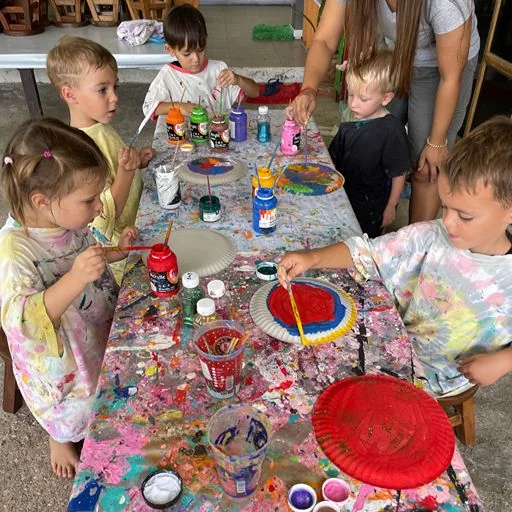
Small classes in early childhood education are often presented as an advantage. However, the number alone is not the small classes in early childhood education are often presented as an advantage. However, the number alone is not the complete story. A smaller group is valuable because of what it can make possible: more conversation, closer observation, timely guidance and stronger relationships.
Parents should therefore ask two questions: How large is the group, and how do teachers use the time and attention available within that group?
Why Small Classes in Early Childhood Education Matter
Young children do not all communicate, participate or learn in the same way. One child may begin an activity immediately, while another watches carefully before joining. One may explain ideas confidently, while another communicates through gestures, short phrases or actions.
Small classes can give teachers more opportunities to recognise these differences. This helps them choose encouragement, questions and activities that respond to each child instead of expecting every child to learn in exactly the same way.
Children Can Be Known as Individuals
When teachers spend time with children in a smaller group, they can become familiar with each child’s interests, temperament, communication style and response to new experiences.
A teacher may notice that one child enjoys learning through movement, while another becomes deeply involved in drawing, construction, stories or imaginative play. Understanding these preferences helps teachers connect new learning with something meaningful to the child.
Individual attention does not mean completing every task for a child. It means knowing when to encourage, when to demonstrate, when to ask a helpful question and when to step back so the child can try independently.
Teachers Can Notice Small Changes
Early progress often appears in small moments. A child answers a question for the first time, waits for a turn with less support, recognises a familiar letter, attempts a more difficult puzzle or asks another child to join a game.
These changes can be easy to miss in a very busy environment. When teachers can observe children more closely, they are better placed to recognise growing confidence and decide what support or challenge may be helpful next.
This careful observation also gives teachers useful examples to share with parents. Instead of receiving only general comments, families can better understand how their child is communicating, participating and developing.
Small Classes Create More Meaningful Conversation
Language develops through interaction. Children need time to listen, understand, respond and hear their ideas extended by an adult.
For example, a teacher might ask, “What do you think will happen?” and then give the child enough time to consider an answer. The teacher can introduce new vocabulary, repeat the child’s idea in a fuller sentence or ask another question that develops the conversation.
Smaller groups can make this back-and-forth communication easier to sustain. This can be particularly valuable in an English-intensive learning environment, where children benefit from natural opportunities to use English during stories, play, routines and shared activities.
Support Can Arrive at the Right Moment
Children build independence by gradually doing more for themselves, but they still need adult guidance. Too much help removes the challenge, while too little help can lead to frustration.
Effective teaching often means noticing the moment when a prompt, question, demonstration or word of reassurance will help. A teacher might show the first step, remind a child of an earlier solution or encourage another attempt without taking over the activity.
Small classes in early childhood education can give teachers more opportunities to provide this carefully timed support. The goal is not constant one-to-one instruction. It is making guidance available when a child’s learning or confidence can genuinely benefit.
Social Situations Can Be Guided Thoughtfully
Preschool is also where children practise sharing, listening, negotiating, taking turns and recovering from disagreements. These skills do not develop simply because children are placed together.
Teachers help by naming feelings, modelling respectful language and guiding children towards possible solutions. A disagreement over a toy can become an opportunity to practise waiting, explaining, listening and finding a fair solution.
When teachers can observe peer interaction closely, everyday social moments become valuable learning experiences instead of problems that must be stopped as quickly as possible.
Activities Can Respond to the Children
A thoughtful teacher adjusts activities according to what children understand and what interests them. If children become fascinated by insects, construction, weather or a story character, the teacher can extend that interest through language, art, counting, investigation and imaginative play.
Smaller groups can make it easier to hear children’s questions and observe how they approach an activity. This does not mean abandoning structure. It means using observation to make planned learning more relevant, engaging and age-appropriate.
Parents can learn more about meaningful early learning on the Shining Stars curriculum page.
Small Does Not Automatically Mean High Quality
Class size is only one part of the learning environment. The quality of a child’s experience also depends on teacher interaction, planning, routines, communication, learning materials and the emotional atmosphere.
A small group with limited engagement is not automatically stronger than a larger group led with skill and care. The benefits of small classes in early childhood education depend on how teachers use the available time and attention.
The important distinction: Do not judge a preschool by the number alone. Observe whether children are genuinely known, noticed, supported and encouraged.
The OECD has examined the connection between structural characteristics and process quality in early childhood education, including how conditions such as group size may influence children’s daily experiences and interactions.
Questions Parents Can Ask
During a preschool visit, ask:
- How do teachers learn about each child’s interests and development?
- How are quieter children encouraged to participate?
- How do teachers decide when a child needs help and when to let the child keep trying?
- Can you give an example of adapting an activity for different children?
- How is a child’s progress shared with parents?
The most useful answers will include real examples from daily practice rather than only promises about personal attention.
For families comparing preschools in Phuket, including those living in Kamala or travelling from nearby Surin, Bang Tao and Patong, the key question is not simply whether a school has small classes. Look at what teachers and children are able to do within those classes.
Families are welcome to visit our school to meet the team and experience the learning environment in person.
Looking for a preschool or kindergarten in Phuket?
Shining Stars School Kamala provides English-intensive, play-based learning for children ages 2–7 in a caring environment with individual attention.
Contact Shining Stars