

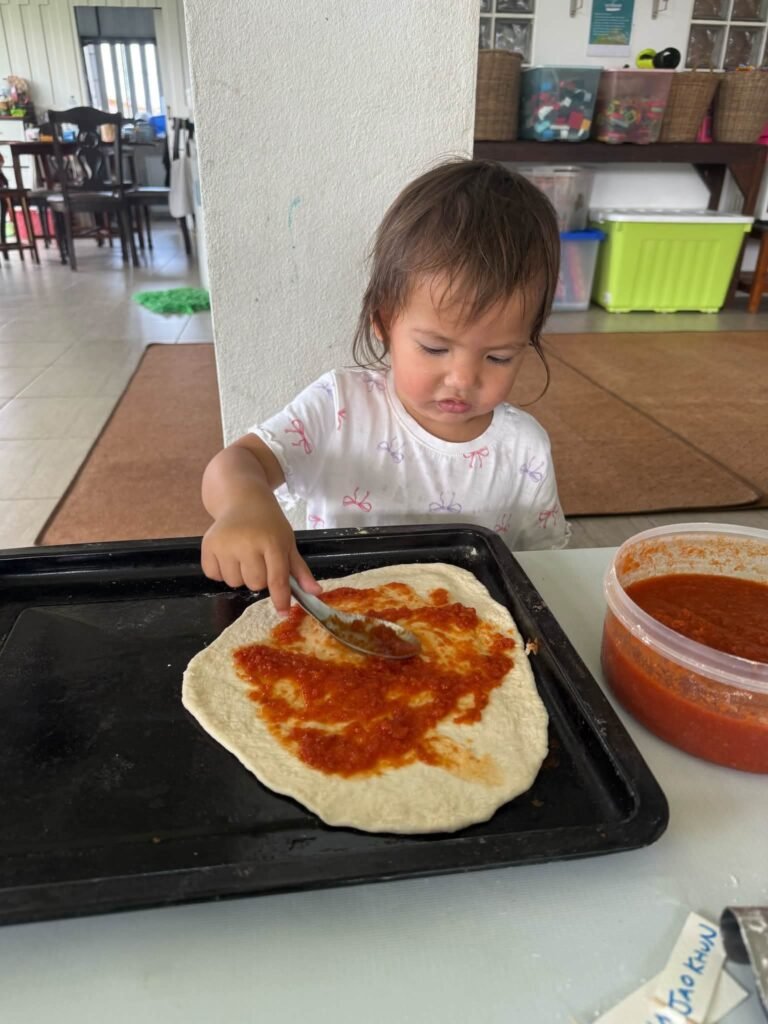
“Let me do it!” can arrive at the most inconvenient moment: shoes are waiting, the bag is open, and everyone needs to leave. Yet that wish to try is worth making room for. Independence in young children grows through small opportunities to make a choice, attempt a task and discover when help is useful.
For families with children aged 2–7, the aim is not to expect children to manage everything alone. It is to offer a manageable part of everyday life that they can gradually make their own.
Start with a choice that really belongs to your child
Offer two options you can comfortably accept: “Would you like this book or that one?” or “Will you put the napkins out or carry the empty cups?” A small, clear choice can be easier to handle than an open-ended question with many possibilities.
Once your child chooses, allow the choice to count. If you always replace their decision with your preferred answer, choosing becomes an exercise in guessing what the adult wants.
For more ideas on giving children a voice, explore NAEYC’s guide to encouraging your child to lead.
Leave one step for them to do
A task does not have to be completed independently to be worthwhile. You might hold a bag open while your child places something inside, begin a difficult fastening, or show the first step and then pause. Ask, “Which part would you like help with?”
A younger child might choose between two items or put one object away. An older child might check a short picture list or help plan what to bring. Adjust the challenge to the child in front of you, rather than using age as a deadline.
Notice the attempt, not just the result
“You turned it around and tried again” tells a child what you noticed. It also makes room for effort that does not immediately succeed. If frustration grows, offer support without making needing help feel like failure.
Choose an unhurried moment for practice. A rushed morning is not always the best time to introduce a new responsibility, and doing something together on a difficult day does not erase earlier progress.
For a closer look at children’s choices during play, read NAEYC’s five essentials of meaningful play.
Where this fits in our learning journey
ME is the individual starting point within Shining Stars School Kamala’s ME–WE–US–ALL OF US Positive Learning Experiences Journey. For parents, small choices offer a practical way to support that focus at home.
This week, try leaving one manageable step to your child. Give time, stay nearby and let “I can try” be enough. To explore our approach for ages 2–7, visit our curriculum page.
Learn ★ Play ★ Grow
Looking for a preschool or kindergarten in Phuket?
Shining Stars School Kamala provides English-intensive, play-based learning for children ages 2–7 in a caring environment with individual attention.
Contact Shining Stars