
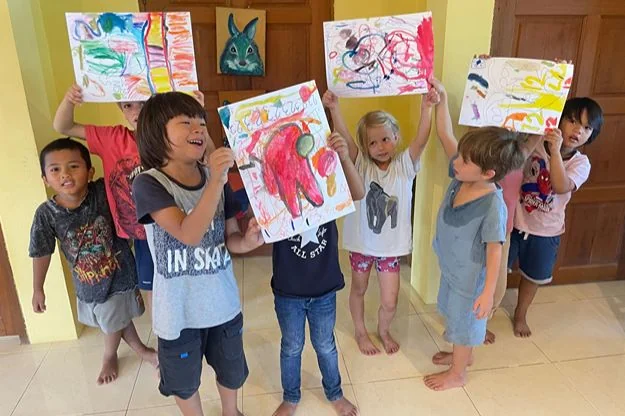
Choosing a preschool in Phuket is an important decision for any family. For parents living in Phuket, the choice can feel especially difficult because there are many different schools, teaching approaches and learning environments available.
The best preschool is not simply the one with the most impressive building or the longest list of activities. What matters most is whether the school provides an environment where your child can feel comfortable, develop confidence and enjoy learning.
This guide explains some of the most important things parents should consider when choosing a preschool in Phuket.
Start With Your Child
Every child is different.
Before comparing schools, think about your own child’s personality, development and needs.
Consider questions such as:
- Does your child enjoy being around other children?
- Are they comfortable in busy environments or do they prefer smaller groups?
- How much English exposure do they currently have?
- Do they learn best through movement and practical activities?
- Are they naturally independent or do they need more reassurance?
- What interests and activities do they enjoy?
A school that works very well for one child may not necessarily be the best environment for another.
The goal is to find a preschool where your child can feel secure while gradually developing new skills and independence.
How a Preschool in Phuket Approaches Learning
Preschool should be much more than preparing children to sit at desks.
Young children learn naturally through exploration, movement, conversation, creativity and play.
When visiting a preschool, ask how children actually spend their day.
Look for opportunities for:
- imaginative play
- art and creativity
- stories and language activities
- early literacy
- early numeracy
- logical thinking
- music and movement
- outdoor play
- fine motor development
- gross motor development
- social interaction
A good early learning programme should provide structure while still allowing children to explore and participate actively.
You can read more about this in our guide to Play-Based Learning in Early Childhood.
Consider Class Size and Individual Attention
Young children benefit from adults who know them well.
When evaluating a preschool, ask how teachers support children individually.
Smaller learning groups can make it easier for teachers to notice:
- how a child communicates
- what activities interest them
- areas where they may need support
- their confidence around other children
- how they are progressing
Individual attention is especially valuable during the early years because development can vary considerably between children of the same age.
At Shining Stars School Kamala, small classes and individual attention are important parts of our learning environment.
Think About English Development
Many families in Phuket want their children to become confident English speakers.
For young children, language development works best when English is used naturally throughout everyday activities rather than only during isolated lessons.
Children can develop language through:
- conversations with teachers
- stories
- songs
- games
- classroom routines
- creative activities
- interactions with other children
Regular exposure allows children to hear vocabulary in context and gradually become more comfortable using English themselves.
Our article Benefits of English Immersion for Young Children explains this approach in more detail.
Observe the Atmosphere
When you visit a preschool, pay attention to how the environment feels.
Look beyond the furniture and decorations.
Observe the interaction between adults and children.
Ask yourself:
- Do children appear comfortable?
- Are teachers engaged with them?
- Are children encouraged to participate?
- Is the atmosphere calm but active?
- Do children have opportunities to make choices?
- Are teachers speaking respectfully with children?
A caring learning environment should help children feel secure enough to explore, communicate and try new things.
Ask About the Daily Routine
Young children usually benefit from a predictable routine.
Ask the school what a typical day looks like.
A balanced preschool day may include a combination of:
- free play
- group activities
- teacher-guided learning
- creative activities
- movement
- outdoor play
- stories
- quiet periods
- social interaction
A routine gives children a sense of security because they gradually understand what happens next.
At the same time, the schedule should allow enough flexibility for young children to explore and learn at an age-appropriate pace.
What to Expect Beyond Worksheets at a Preschool in Phuket
Parents naturally want their children to develop early reading, writing and mathematics skills.
However, preschool learning should not depend entirely on worksheets.
Before children can write confidently, they need to develop hand strength, coordination and fine motor control.For example, UNICEF explains that early childhood development is supported by opportunities for early learning and responsive caregiving, including talking, singing and playing.
Similarly, mathematical understanding grows when children handle objects, sort, compare, count and recognise patterns before ideas become abstract.
To become independent readers, children need vocabulary, listening skills, sound awareness and an interest in stories.
A strong preschool programme therefore develops the foundations for later academic learning rather than focusing only on formal written work.
Consider Social and Emotional Development
Preschool is also where many children learn how to function as part of a group.
They practise skills such as:
- sharing
- taking turns
- communicating their needs
- listening to others
- solving simple disagreements
- forming friendships
- managing emotions
- becoming more independent
These abilities are important for both school readiness and everyday life.
Parents should therefore ask how the school supports children’s social-emotional development alongside literacy and numeracy.
Ask How the School Communicates With Parents
Good communication between parents and teachers is important.
Parents should feel comfortable asking questions and discussing their child’s development.
When considering a school, find out how teachers communicate information such as:
- how a child is settling
- progress and development
- classroom experiences
- important school information
- concerns that may require cooperation between home and school
A positive partnership between parents and teachers helps provide consistency for the child.
Visit the School Before Deciding
Websites and photographs are useful, but they cannot fully show what a school feels like.
Whenever possible, visit the preschool.
During the visit, observe the classrooms and learning environment and speak with the people who will be working with your child.
It is also an opportunity to ask questions about the school’s approach.
You may want to ask:
- How do you help new children settle?
- How do children learn English?
- How much of the day involves play?
- How long does this school exist and do they have a valid licence?
- How do you support different levels of development?
- What opportunities are there for creativity?
- How do teachers communicate with parents?
- How do you encourage independence?
- How do you prepare children for the next stage of school?
The answers can tell you much more than a brochure.
Consider Location and Your Family Routine
Phuket traffic and travel time should also be part of your decision.
A preschool that fits comfortably into your family’s daily routine can make mornings and afternoons easier.
Consider:
- travel time from home
- your work schedule
- the child’s morning routine
- how much time the child spends travelling each day
For families living in or around Kamala, a nearby school can provide a practical alternative to travelling long distances across Phuket every morning.
Do Not Choose Only by Price
Fees are understandably part of every family’s decision.
However, comparing schools only by price can be misleading because preschool programmes may differ considerably.
Instead, consider what the overall programme provides for your child.
Look at:
- learning environment
- teaching approach
- English exposure
- individual attention
- communication
- activities
- child development
- how comfortable your child appears at the school
The most important question is whether the environment is a good fit for your child and your family.
Give Your Child Time to Adjust
Even after choosing the right preschool, starting school is a significant change.
Some children settle immediately. Others need more time.
Morning tears or hesitation during the first few days do not automatically mean that the school is a poor fit.
Consistent routines, calm goodbyes and communication between parents and teachers can help.
For more guidance, read Separation Anxiety at Preschool: How Parents Can Help Their Child Settle In.
Preparing Before the First Day
Once you have chosen a preschool, begin preparing your child positively.
Talk about:
- their teacher
- playing with other children
- activities they may enjoy
- what will happen in the morning
- when you will return to collect them
Building familiarity can reduce uncertainty.
Our guide, How to Prepare Your Child for Kindergarten contains practical suggestions for making the transition easier.
Choosing the Right Preschool in Phuket for Your Child
Shining Stars School Kamala is a progressive preschool and kindergarten for children approximately ages 2–7.
Our approach includes:
- English-intensive learning
- small classes
- individual attention
- learning through play
- creative learning
- literacy and numeracy
- communication skills
- logical thinking
- social-emotional development
- fine and gross motor development
We aim to provide positive learning experiences in a caring environment where children can Learn ★ Play ★ Grow.
Families choosing a preschool in Phuket are welcome to visit Shining Stars School Kamala. We also welcome families travelling from nearby Surin, Bang Tao and Patong to explore our preschool and kindergarten curriculum and arrange a school visit.
Looking for a preschool or kindergarten in Phuket?
Shining Stars School Kamala provides English-intensive, play-based learning for children ages 2–7 in a caring environment with individual attention.
Contact Shining Stars