

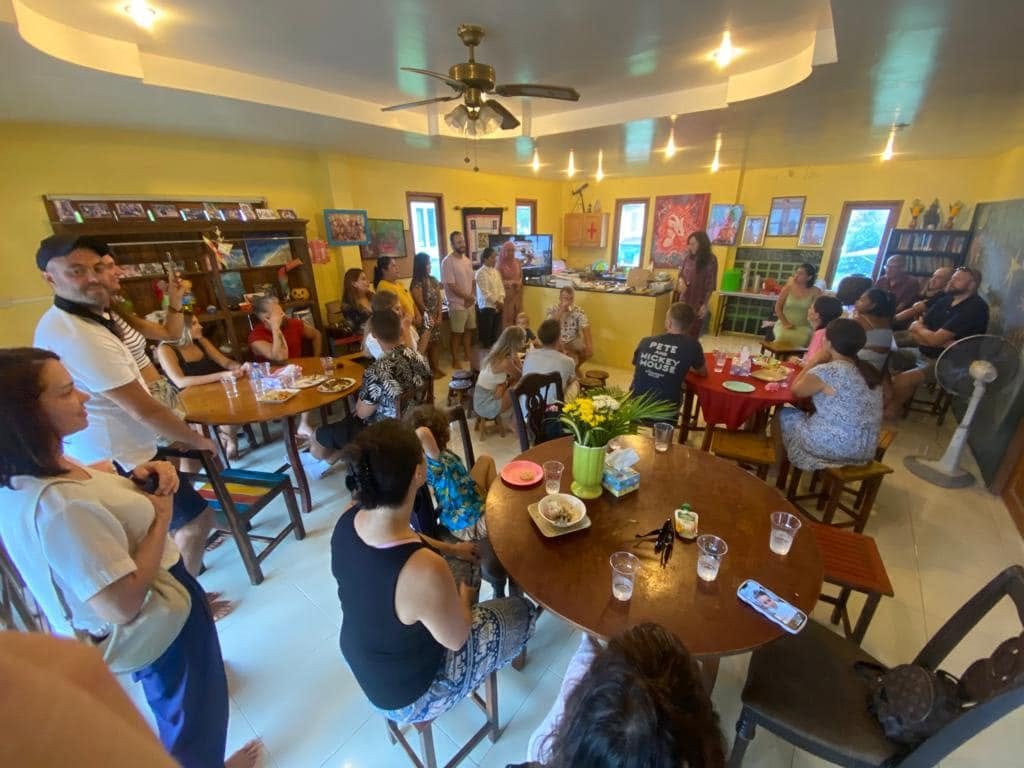
Starting preschool is an important step for both children and their parents. Children enter a new environment filled with different routines, relationships, activities and expectations. Parents naturally want to know whether their child feels comfortable, is making friends and is progressing well.
Teachers see children in a different setting from the one parents see at home. When parents and teachers communicate openly, they can bring these two perspectives together and develop a more complete understanding of the child.
Good parent-teacher communication in preschool is therefore much more than sharing announcements or discussing problems. It creates a partnership that supports a child’s learning, confidence and emotional wellbeing.
Parents and teachers know different sides of the child
Parents know their child’s personality, home routines, interests, preferences and family experiences. They may notice changes in sleeping, eating, behaviour or emotions that are not immediately visible at school.
Teachers observe how the child responds in a group environment. They see how the child:
- Communicates with other children
- Participates in activities
- Responds to instructions
- Manages frustration
- Approaches new experiences
- Develops early literacy and numeracy skills
- Uses fine and gross motor skills
- Builds confidence and independence
Neither perspective is complete on its own. When information is shared respectfully, parents and teachers can better understand what the child may be experiencing.
Communication helps children feel secure
Young children benefit from consistency between home and school. When the adults around them communicate, children receive clearer and more reassuring support.
For example, a teacher who knows that a child has recently experienced a change at home may be able to offer additional reassurance during the school day. A parent who understands what the class is currently learning can talk about it at home and encourage the child’s interest.
This connection can make school feel less like a separate part of the child’s life and more like an environment supported by the important adults around them.
Responsive, back-and-forth relationships with caring adults play an important role in early development. The Center on the Developing Child at Harvard University explains how these interactions help support developing communication, social and emotional skills.
Small observations can reveal meaningful progress
Early childhood progress does not always appear as a test result or a finished worksheet. It is often visible in small but important moments.
A child may begin to:
- Ask for help more confidently
- Join a group activity
- Share materials with another child
- Express an idea in English
- Complete a task more independently
- Recognise letters, numbers, patterns or sounds
- Cope more calmly with disappointment
- Explain something that happened during the day
Teachers can help parents recognise the learning behind these moments. Parents can also share changes they have noticed at home.
Together, these observations create a clearer picture of the child’s development and help everyone appreciate progress that might otherwise go unnoticed.
Concerns can be addressed earlier
Open communication also makes it easier to identify areas in which a child may need additional support.
This does not mean looking for problems or comparing children. Young children develop at different rates and may behave differently at home and at school. A behaviour seen in only one environment may have a simple explanation.
By sharing observations early, parents and teachers can look for patterns and agree on practical ways to support the child. This is generally more helpful than waiting until a small concern has become a larger source of frustration.
Children benefit from consistent encouragement
Children can become confused when home and school respond very differently to the same behaviour or challenge. Parents and teachers do not need to approach every situation identically, but a shared understanding can provide valuable consistency.
If a child is learning to take turns, express feelings, follow routines or complete tasks independently, both teachers and parents can reinforce the same positive message.
This consistency is particularly valuable when children are learning through play. When parents understand the skills behind classroom activities, they can encourage similar exploration, communication and problem-solving at home.
Good communication must work in both directions
Effective parent-teacher communication is not simply a teacher providing information to a parent. Parents should also feel comfortable sharing useful information, asking questions and discussing concerns.
The National Association for the Education of Young Children recommends communication that is timely, continuous and genuinely two-way. Its family-engagement principles also recognise that families and teachers each contribute valuable knowledge about the child.
Useful communication may include:
- Brief conversations during suitable drop-off or collection times
- Planned parent-teacher meetings
- Updates about learning and development
- School notices and reminders
- Questions from parents
- Information about important changes at home
- Discussions about ways to support a child consistently
The method may vary, but the purpose should remain the same: helping the child feel understood and supported.
How parents can support positive communication
Parents do not need to wait for a formal meeting before communicating with a teacher. A short, clear conversation can often provide helpful context.
Parents can support the partnership by:
- Sharing important changes that may affect the child.
- Asking specific questions instead of relying only on “How was today?”
- Listening to observations with an open mind.
- Mentioning progress or behaviour noticed at home.
- Choosing a suitable time for longer conversations.
- Working with the teacher on practical, consistent approaches.
- Raising concerns calmly and early.
Communication works best when everyone begins with the understanding that parents and teachers want the child to have a positive experience.
A partnership centred on the child
Parents are a child’s first and most enduring teachers. Preschool educators contribute another valuable perspective through their daily observations of learning, play, communication and social development.
When these adults work together, children benefit from greater consistency, earlier support and a stronger connection between home and school.
Good communication can also help parents who are choosing a preschool in Phuket. Asking how teachers share observations, respond to questions and discuss a child’s development can reveal a great deal about a school’s approach to working with families.At Shining Stars School Kamala, we believe that positive relationships between children, families and teachers are an important part of a caring early-learning environment.
Shining Stars is a progressive preschool and kindergarten in Kamala, Phuket, welcoming children ages 2–7 from Kamala and nearby communities, including Surin, Bang Tao and Patong.
Learn ★ Play ★ Grow
Looking for a preschool or kindergarten in Phuket?
Shining Stars School Kamala provides English-intensive, play-based learning for children ages 2–7 in a caring environment with individual attention.
Contact Shining Stars