

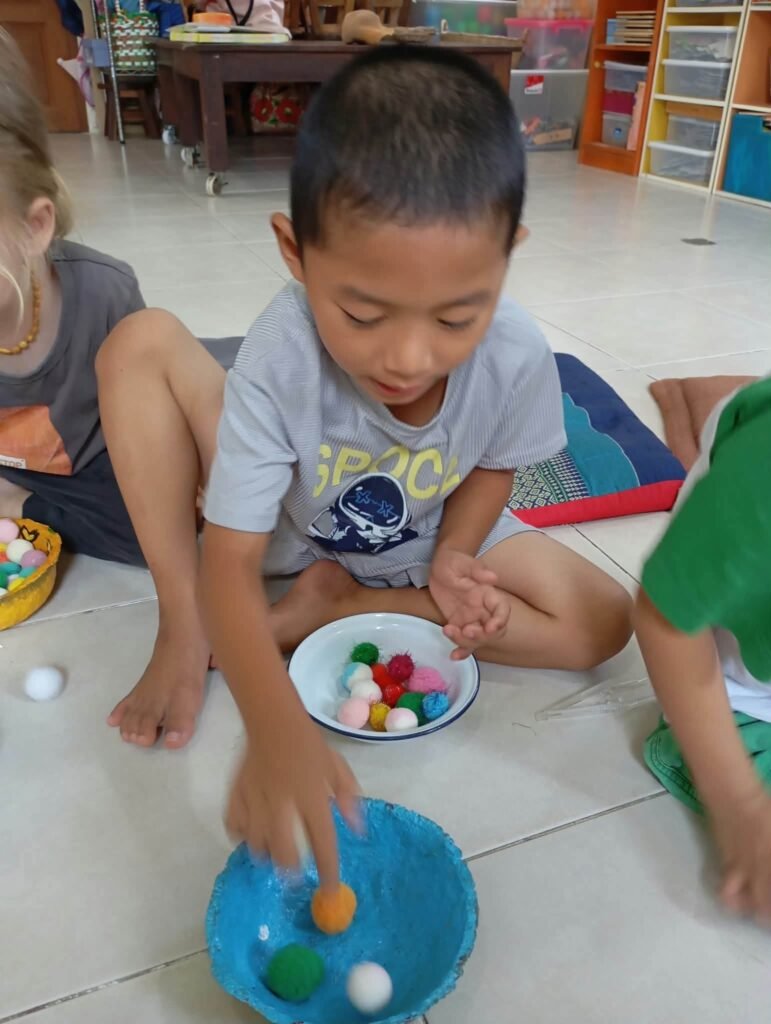
“Why did that happen?” A child’s question can feel like a request for an immediate answer. Sometimes it is also an invitation to look more closely together. Encouraging curiosity in children does not require adults to know everything. It starts with taking their interest seriously.
Between ages 2–7, children may show curiosity through words, gestures, repeated actions or simply watching. A question does not have to be spoken to deserve attention.
Begin with what your child notices
Before explaining, try “What can you see?” or “What changed?” A child might notice that a shadow looks different, a leaf has curled or a cardboard tower keeps falling. Give them time to describe or show you the detail that caught their attention.
Not every question needs another question in return. If your child simply wants information, give a clear answer you can stand behind. The aim is a conversation, not making them work for every response.
For more ways to follow a child’s interest, explore NAEYC’s guide to exploring science with your child.
Invite a prediction without requiring a correct answer
When there is something safe to explore, ask what they think might happen. At home, for example, you could move a torch nearer to and farther from a large object and watch the shadow on a wall together. Keep the light away from eyes and let an adult handle any unsuitable equipment.
A younger child may point or show a prediction through movement. An older child may offer an explanation. Neither needs to use scientific vocabulary to take part.
Make changing your mind ordinary
After looking together, ask, “Was that what we expected?” If the result is surprising, treat it as useful information. “Our first idea was different. What did we notice?” makes room for another attempt.
It is fine to say, “I don’t know yet.” You can look for a reliable explanation together or return to the question later. Adults model curiosity when they are honest about what they know.
For further home exploration ideas, read NAEYC’s guide to nurturing the scientist in your child.
Looking beyond the familiar
ALL OF US is the wider-world part of Shining Stars School Kamala’s ME–WE–US–ALL OF US Positive Learning Experiences Journey. At home, following a child’s question can be a simple way to open that wider view.
You do not need a special outing or a collection of equipment. One interesting detail, a little time and a willing listener can begin a worthwhile conversation. Discover more about our approach for ages 2–7 on our curriculum page.
Learn ★ Play ★ Grow
Looking for a preschool or kindergarten in Phuket?
Shining Stars School Kamala provides English-intensive, play-based learning for children ages 2–7 in a caring environment with individual attention.
Contact Shining Stars